
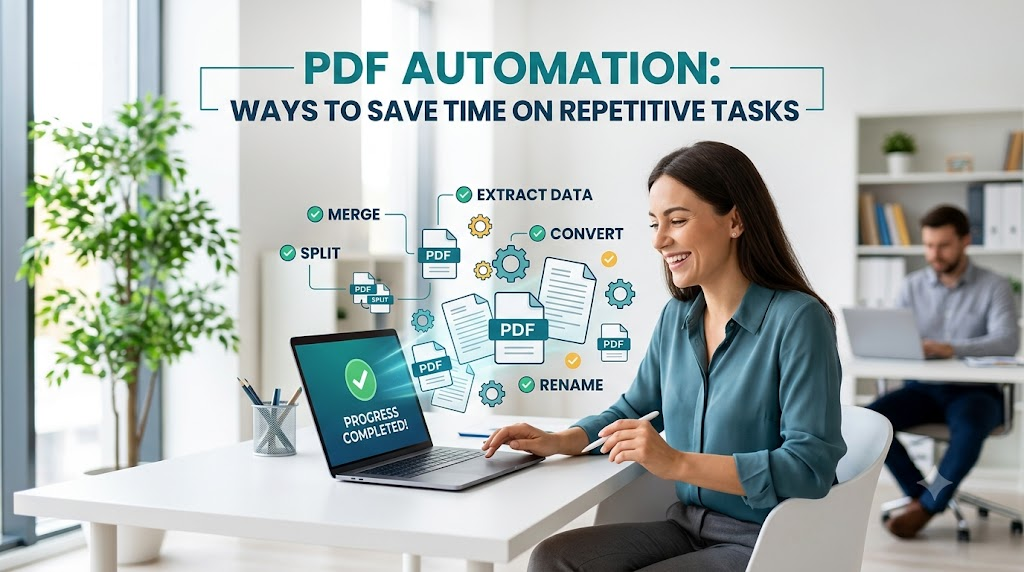
If your team manually opens, compresses, watermarks, and re-saves 50 PDF files every Monday morning, you are burning valuable human potential on low-value repetitive tasks. Automating your PDF workflows standardizes document output, eliminates human error, and delivers massive time savings.
Key Takeaways
- Eliminate repetitive manual clicks by setting up automated batch workflows for recurring tasks.
- Automate monthly invoice generation and receipt merging using scheduled batch processing.
- Leverage developer APIs and webhook triggers to compress and watermark files upon cloud upload.
- Free your team from low-value administrative work to focus on strategic business priorities.
The Top 4 Candidates for PDF Workflow Automation
1. Batch Invoicing: Automatically merging generated invoice PDFs with matching timesheets and expense receipts at the end of each billing cycle.
2. Asset Compression: Automatically optimizing all employee-uploaded PDF assets before storing them in cloud databases.
3. Brand Watermarking: Automatically applying confidential or draft watermarks to documents based on their project status tag.
4. E-Signature Dispatch: Automatically routing contracts to relevant executives when a deal reaches the “Closed-Won” stage in your CRM.
Batch Processing with Browser-Based Power Tools
%22%20%2F%3E%0A%20%20%20%20%20%20%3Crect%20width%3D%22800%22%20height%3D%22450%22%20fill%3D%22url(%23grid)%22%20opacity%3D%220.8%22%20%2F%3E%0A%20%20%20%20%20%20%0A%20%20%20%20%20%20%3C!--%20Brand%20Top%20Watermark%20%2F%20Label%20--%3E%0A%20%20%20%20%20%20%3Cg%20transform%3D%22translate(48%2C%2048)%22%3E%0A%20%20%20%20%20%20%20%20%3Crect%20x%3D%220%22%20y%3D%220%22%20width%3D%22110%22%20height%3D%2224%22%20rx%3D%2212%22%20fill%3D%22%23FEE2E2%22%20%2F%3E%0A%20%20%20%20%20%20%20%20%3Ctext%20x%3D%2255%22%20y%3D%2216%22%20fill%3D%22%233949AB%22%20font-size%3D%2210%22%20font-weight%3D%22bold%22%20font-family%3D%22system-ui%2C%20sans-serif%22%20text-anchor%3D%22middle%22%3EDIGITAL%20WORKFLOWS%3C%2Ftext%3E%0A%20%20%20%20%20%20%20%20%0A%20%20%20%20%20%20%3C%2Fg%3E%0A%0A%20%20%20%20%20%20%3C!--%20Visual%20Topic%20Content%20--%3E%0A%20%20%20%20%20%20%0A%20%20%20%20%20%20%3Cg%20transform%3D%22translate(60%2C%2050)%22%3E%0A%20%20%20%20%20%20%20%20%3C!--%20Diagram%20Layout%20--%3E%0A%20%20%20%20%20%20%20%20%3Crect%20x%3D%2240%22%20y%3D%2260%22%20width%3D%22180%22%20height%3D%22200%22%20rx%3D%2210%22%20fill%3D%22%23FFFFFF%22%20stroke%3D%22%23E2E8F0%22%20stroke-width%3D%222%22%20filter%3D%22url(%23shadow)%22%20%2F%3E%0A%20%20%20%20%20%20%20%20%3Ctext%20x%3D%22130%22%20y%3D%22100%22%20fill%3D%22%231A1A1A%22%20font-size%3D%2214%22%20font-weight%3D%22bold%22%20font-family%3D%22system-ui%2C%20sans-serif%22%20text-anchor%3D%22middle%22%3EInput%20PDF%3C%2Ftext%3E%0A%20%20%20%20%20%20%20%20%3Crect%20x%3D%2260%22%20y%3D%22120%22%20width%3D%22140%22%20height%3D%2212%22%20rx%3D%224%22%20fill%3D%22%23F1F5F9%22%20%2F%3E%0A%20%20%20%20%20%20%20%20%3Crect%20x%3D%2260%22%20y%3D%22145%22%20width%3D%22110%22%20height%3D%2212%22%20rx%3D%224%22%20fill%3D%22%23F1F5F9%22%20%2F%3E%0A%20%20%20%20%20%20%20%20%3Crect%20x%3D%2260%22%20y%3D%22170%22%20width%3D%22130%22%20height%3D%2212%22%20rx%3D%224%22%20fill%3D%22%23F1F5F9%22%20%2F%3E%0A%20%20%20%20%20%20%20%20%3Ccircle%20cx%3D%22130%22%20cy%3D%22220%22%20r%3D%2216%22%20fill%3D%22%23FEE2E2%22%20%2F%3E%0A%20%20%20%20%20%20%20%20%3Ctext%20x%3D%22130%22%20y%3D%22225%22%20fill%3D%22%233949AB%22%20font-size%3D%2212%22%20font-weight%3D%22bold%22%20text-anchor%3D%22middle%22%3ERAW%3C%2Ftext%3E%0A%0A%20%20%20%20%20%20%20%20%3C!--%20Process%20Flow%20Core%20--%3E%0A%20%20%20%20%20%20%20%20%3Cg%20transform%3D%22translate(250%2C%20120)%22%3E%0A%20%20%20%20%20%20%20%20%20%20%3Crect%20x%3D%220%22%20y%3D%220%22%20width%3D%22180%22%20height%3D%2280%22%20rx%3D%2212%22%20fill%3D%22%233949AB%22%20filter%3D%22url(%23shadow-lg)%22%20%2F%3E%0A%20%20%20%20%20%20%20%20%20%20%3Ctext%20x%3D%2290%22%20y%3D%2235%22%20fill%3D%22%23FFFFFF%22%20font-size%3D%2214%22%20font-weight%3D%22bold%22%20font-family%3D%22system-ui%2C%20sans-serif%22%20text-anchor%3D%22middle%22%3ESmart%20Engine%3C%2Ftext%3E%0A%20%20%20%20%20%20%20%20%20%20%3Ctext%20x%3D%2290%22%20y%3D%2255%22%20fill%3D%22%23FFFFFF%22%20opacity%3D%220.9%22%20font-size%3D%2211%22%20font-family%3D%22system-ui%2C%20sans-serif%22%20text-anchor%3D%22middle%22%3EOptimization%20%26amp%3B%20Parsing%3C%2Ftext%3E%0A%20%20%20%20%20%20%20%20%20%20%3C!--%20Flow%20Arrows%20--%3E%0A%20%20%20%20%20%20%20%20%20%20%3Cpath%20d%3D%22M-30%2040%20L-5%2040%20M-15%2032%20L-5%2040%20L-15%2048%22%20stroke%3D%22%233949AB%22%20stroke-width%3D%223%22%20stroke-linecap%3D%22round%22%20stroke-linejoin%3D%22round%22%20%2F%3E%0A%20%20%20%20%20%20%20%20%20%20%3Cpath%20d%3D%22M185%2040%20L210%2040%20M200%2032%20L210%2040%20L200%2048%22%20stroke%3D%22%233949AB%22%20stroke-width%3D%223%22%20stroke-linecap%3D%22round%22%20stroke-linejoin%3D%22round%22%20%2F%3E%0A%20%20%20%20%20%20%20%20%3C%2Fg%3E%0A%0A%20%20%20%20%20%20%20%20%3C!--%20Result%20Card%20--%3E%0A%20%20%20%20%20%20%20%20%3Crect%20x%3D%22460%22%20y%3D%2260%22%20width%3D%22180%22%20height%3D%22200%22%20rx%3D%2210%22%20fill%3D%22%23FFFFFF%22%20stroke%3D%22%2310B981%22%20stroke-width%3D%222%22%20filter%3D%22url(%23shadow)%22%20%2F%3E%0A%20%20%20%20%20%20%20%20%3Ctext%20x%3D%22550%22%20y%3D%22100%22%20fill%3D%22%231A1A1A%22%20font-size%3D%2214%22%20font-weight%3D%22bold%22%20font-family%3D%22system-ui%2C%20sans-serif%22%20text-anchor%3D%22middle%22%3EOutput%20Result%3C%2Ftext%3E%0A%20%20%20%20%20%20%20%20%3Crect%20x%3D%22480%22%20y%3D%22120%22%20width%3D%22140%22%20height%3D%2212%22%20rx%3D%224%22%20fill%3D%22%23ECFDF5%22%20%2F%3E%0A%20%20%20%20%20%20%20%20%3Crect%20x%3D%22480%22%20y%3D%22145%22%20width%3D%22120%22%20height%3D%2212%22%20rx%3D%224%22%20fill%3D%22%23ECFDF5%22%20%2F%3E%0A%20%20%20%20%20%20%20%20%3Crect%20x%3D%22480%22%20y%3D%22170%22%20width%3D%22140%22%20height%3D%2212%22%20rx%3D%224%22%20fill%3D%22%23ECFDF5%22%20%2F%3E%0A%20%20%20%20%20%20%20%20%3Ccircle%20cx%3D%22550%22%20cy%3D%22220%22%20r%3D%2216%22%20fill%3D%22%23D1FAE5%22%20%2F%3E%0A%20%20%20%20%20%20%20%20%3Ctext%20x%3D%22550%22%20y%3D%22225%22%20fill%3D%22%23059669%22%20font-size%3D%2212%22%20font-weight%3D%22bold%22%20text-anchor%3D%22middle%22%3EDONE%3C%2Ftext%3E%0A%20%20%20%20%20%20%3C%2Fg%3E%0A%20%20%20%20%0A%0A%20%20%20%20%20%20%3C!--%20Bottom%20Brand%20Bar%20--%3E%0A%20%20%20%20%20%20%3Cg%20transform%3D%22translate(48%2C%20410)%22%3E%0A%20%20%20%20%20%20%20%20%3Crect%20x%3D%220%22%20y%3D%220%22%20width%3D%2214%22%20height%3D%2214%22%20rx%3D%223%22%20fill%3D%22%233949AB%22%20%2F%3E%0A%20%20%20%20%20%20%20%20%3Ctext%20x%3D%2222%22%20y%3D%2212%22%20fill%3D%22%2364748B%22%20font-size%3D%2212%22%20font-weight%3D%22600%22%20font-family%3D%22system-ui%2C%20sans-serif%22%3EiLovePDF.in%20Blog%20Guide%3C%2Ftext%3E%0A%20%20%20%20%20%20%3C%2Fg%3E%0A%20%20%20%20%3C%2Fsvg%3E%0A%20%20)
Architectural breakdown showing input stages, processing engine, and final verified output.
You do not need to write complex code to automate. Modern suites like iLovePDF.in allow you to drag and drop dozens of files simultaneously for batch compression, batch conversion, and batch watermarking in a single click.
Developer Integration: PDF REST APIs and Webhooks
For deep enterprise automation, integrate PDF REST APIs directly into your web applications and ERP systems. Configure webhooks so that whenever a user uploads a PDF, the server automatically generates a compressed preview thumbnail, extracts metadata, and applies OCR in the background.
Pro Tip: Set up an automated notification channel (e.g., Slack or email alert) whenever a high-priority contract is digitally executed by a client.
Measuring ROI on Document Automation
%22%20%2F%3E%0A%20%20%20%20%20%20%3Crect%20width%3D%22800%22%20height%3D%22450%22%20fill%3D%22url(%23grid)%22%20opacity%3D%220.8%22%20%2F%3E%0A%20%20%20%20%20%20%0A%20%20%20%20%20%20%3C!--%20Brand%20Top%20Watermark%20%2F%20Label%20--%3E%0A%20%20%20%20%20%20%3Cg%20transform%3D%22translate(48%2C%2048)%22%3E%0A%20%20%20%20%20%20%20%20%3Crect%20x%3D%220%22%20y%3D%220%22%20width%3D%22110%22%20height%3D%2224%22%20rx%3D%2212%22%20fill%3D%22%23FEE2E2%22%20%2F%3E%0A%20%20%20%20%20%20%20%20%3Ctext%20x%3D%2255%22%20y%3D%2216%22%20fill%3D%22%233949AB%22%20font-size%3D%2210%22%20font-weight%3D%22bold%22%20font-family%3D%22system-ui%2C%20sans-serif%22%20text-anchor%3D%22middle%22%3EDIGITAL%20WORKFLOWS%3C%2Ftext%3E%0A%20%20%20%20%20%20%20%20%0A%20%20%20%20%20%20%3C%2Fg%3E%0A%0A%20%20%20%20%20%20%3C!--%20Visual%20Topic%20Content%20--%3E%0A%20%20%20%20%20%20%0A%20%20%20%20%20%20%3Cg%20transform%3D%22translate(60%2C%2050)%22%3E%0A%20%20%20%20%20%20%20%20%3Crect%20x%3D%2220%22%20y%3D%2240%22%20width%3D%22640%22%20height%3D%22240%22%20rx%3D%2216%22%20fill%3D%22%23FFFFFF%22%20stroke%3D%22%23E2E8F0%22%20stroke-width%3D%222%22%20filter%3D%22url(%23shadow)%22%20%2F%3E%0A%20%20%20%20%20%20%20%20%0A%20%20%20%20%20%20%20%20%3C!--%20Step%20Indicator%20--%3E%0A%20%20%20%20%20%20%20%20%3Ccircle%20cx%3D%2270%22%20cy%3D%2290%22%20r%3D%2228%22%20fill%3D%22%233949AB%22%20%2F%3E%0A%20%20%20%20%20%20%20%20%3Ctext%20x%3D%2270%22%20y%3D%2298%22%20fill%3D%22%23FFFFFF%22%20font-size%3D%2220%22%20font-weight%3D%22bold%22%20font-family%3D%22system-ui%2C%20sans-serif%22%20text-anchor%3D%22middle%22%3E1%3C%2Ftext%3E%0A%20%20%20%20%20%20%20%20%0A%20%20%20%20%20%20%20%20%3Ctext%20x%3D%22120%22%20y%3D%2285%22%20fill%3D%22%231A1A1A%22%20font-size%3D%2218%22%20font-weight%3D%22bold%22%20font-family%3D%22system-ui%2C%20sans-serif%22%3EStep%201%20Visual%20Guide%3C%2Ftext%3E%0A%20%20%20%20%20%20%20%20%3Ctext%20x%3D%22120%22%20y%3D%22108%22%20fill%3D%22%2364748B%22%20font-size%3D%2213%22%20font-family%3D%22system-ui%2C%20sans-serif%22%3EActionable%20execution%20steps%20for%20PDF%20automation%3C%2Ftext%3E%0A%20%20%20%20%20%20%20%20%0A%20%20%20%20%20%20%20%20%3C!--%20Action%20Box%20--%3E%0A%20%20%20%20%20%20%20%20%3Crect%20x%3D%22120%22%20y%3D%22135%22%20width%3D%22500%22%20height%3D%22110%22%20rx%3D%228%22%20fill%3D%22%23F8FAFC%22%20stroke%3D%22%23CBD5E1%22%20stroke-dasharray%3D%226%2C6%22%20stroke-width%3D%221.5%22%20%2F%3E%0A%20%20%20%20%20%20%20%20%3Crect%20x%3D%22280%22%20y%3D%22160%22%20width%3D%22180%22%20height%3D%2244%22%20rx%3D%228%22%20fill%3D%22%233949AB%22%20filter%3D%22url(%23shadow)%22%20%2F%3E%0A%20%20%20%20%20%20%20%20%3Ctext%20x%3D%22370%22%20y%3D%22187%22%20fill%3D%22%23FFFFFF%22%20font-size%3D%2214%22%20font-weight%3D%22bold%22%20font-family%3D%22system-ui%2C%20sans-serif%22%20text-anchor%3D%22middle%22%3EExecute%20Step%3C%2Ftext%3E%0A%20%20%20%20%20%20%20%20%3Ctext%20x%3D%22370%22%20y%3D%22225%22%20fill%3D%22%2394A3B8%22%20font-size%3D%2211%22%20font-family%3D%22system-ui%2C%20sans-serif%22%20text-anchor%3D%22middle%22%3EClick%20or%20drag%20files%20directly%20into%20browser%3C%2Ftext%3E%0A%20%20%20%20%20%20%3C%2Fg%3E%0A%20%20%20%20%0A%0A%20%20%20%20%20%20%3C!--%20Bottom%20Brand%20Bar%20--%3E%0A%20%20%20%20%20%20%3Cg%20transform%3D%22translate(48%2C%20410)%22%3E%0A%20%20%20%20%20%20%20%20%3Crect%20x%3D%220%22%20y%3D%220%22%20width%3D%2214%22%20height%3D%2214%22%20rx%3D%223%22%20fill%3D%22%233949AB%22%20%2F%3E%0A%20%20%20%20%20%20%20%20%3Ctext%20x%3D%2222%22%20y%3D%2212%22%20fill%3D%22%2364748B%22%20font-size%3D%2212%22%20font-weight%3D%22600%22%20font-family%3D%22system-ui%2C%20sans-serif%22%3EiLovePDF.in%20Blog%20Guide%3C%2Ftext%3E%0A%20%20%20%20%20%20%3C%2Fg%3E%0A%20%20%20%20%3C%2Fsvg%3E%0A%20%20)
Direct browser workflow for completing this task in seconds.
Track metrics like “Time per document processed” and “Average deal cycle length”. Organizations that automate document workflows typically recover 5 to 10 hours per employee per week.
Comprehensive Deep Dive into PDF automation
In conclusion, the mastery of PDF automation is not merely a technical skill; it is a vital component of modern digital literacy. Whether you are a student submitting a thesis, a small business owner invoicing clients, or a corporate executive managing global contracts, the principles of Digital Workflows remain the same. By staying informed about best practices, leveraging tools optimized for batch PDF processing, and remaining adaptable to emerging technologies, you can ensure that your document workflows are as efficient, secure, and professional as possible.
One of the most common pitfalls users encounter when attempting PDF automation is overlooking the importance of cross-platform compatibility. A document might render perfectly on a high-resolution desktop monitor but become completely illegible when opened on a mobile device or a legacy operating system. To mitigate this risk, it is essential to utilize tools that strictly adhere to ISO standards for document formatting. This guarantees that whether you are focusing on batch PDF processing or broader Digital Workflows applications, the end-user experience remains consistent, professional, and accessible.
Looking toward the future, the intersection of artificial intelligence and PDF automation promises to revolutionize the industry even further. Predictive analytics, optical character recognition (OCR), and machine learning models are already being integrated into standard workflows, allowing for unprecedented levels of automation. Imagine a scenario where the system automatically identifies the need for automate PDF tasks and executes it flawlessly without any human intervention. As these technologies mature, the barrier to entry for complex document manipulation will continue to lower, ushering in a new era of digital fluency.
Security and compliance should always be top of mind when optimizing your Digital Workflows strategies. The process of PDF automation often involves handling personally identifiable information (PII), financial records, or proprietary corporate data. Ensuring that your chosen platform utilizes end-to-end encryption, adheres to GDPR and CCPA regulations, and automatically purges files post-processing is non-negotiable. Furthermore, incorporating batch PDF processing into your security protocols adds an additional layer of defense against unauthorized access, safeguarding your intellectual property from emerging cyber threats.
Let’s explore the broader economic impact of efficient document handling. Inefficiencies in PDF automation cost the global economy billions of dollars annually in lost productivity, miscommunication, and administrative bottlenecks. By implementing automated systems that handle automate PDF tasks seamlessly, organizations can reclaim countless hours previously wasted on manual data entry and formatting corrections. This transition allows human capital to be redirected toward strategic initiatives, creative problem-solving, and client relationship management—areas where human intuition vastly outperforms automated scripts.
Understanding the technical nuances behind PDF automation can provide a significant competitive advantage. At its core, the process involves parsing complex data structures—often containing embedded fonts, vector graphics, and metadata—and translating them into a universally recognized format. When you execute tasks involving automate PDF tasks, the underlying engine must carefully balance compression ratios with visual fidelity. A minor miscalculation could result in pixelated images or corrupted text layers, which is why utilizing proven, industry-standard tools is absolutely paramount for anyone dealing with sensitive or high-value documents.
When navigating the complexities of PDF automation, it becomes immediately apparent how critical reliable document management is to modern workflows. In an era where digital transformation dictates the pace of business, mastering PDF automation ensures that your files remain secure, accessible, and universally compatible across all devices and platforms. This is not just a matter of convenience; it is a fundamental requirement for maintaining data integrity and professional standards in a fast-paced environment. Organizations that prioritize automate PDF tasks consistently report higher efficiency metrics, fewer compliance issues, and a significantly reduced carbon footprint by eliminating unnecessary paper trails.
The rapid evolution of Digital Workflows has fundamentally shifted how we interact with information. Historically, tasks related to PDF automation required specialized software, significant processing power, and extensive training. Today, cloud-based architectures and streamlined interfaces have democratized access to these powerful tools. By leveraging advanced algorithms for batch PDF processing, users can achieve professional-grade results in a fraction of the time. This paradigm shift not only empowers individual creators and freelancers but also allows massive enterprise operations to scale their document processing pipelines without incurring exponential infrastructure costs.
Pro Tip: Consistently monitoring the latest trends in PDF automation ensures that your workflows remain efficient and compliant with emerging industry standards.
Frequently Asked Questions
Do I need programming skills to automate basic PDF tasks?
No! You can use batch upload features in web tools or no-code automation platforms (like Zapier or Make) to connect cloud storage folders directly to PDF operations.
Can PDF automation handle encrypted files?
Automated pipelines can process encrypted files provided the authorized decryption key or certificate is securely passed via API parameters.